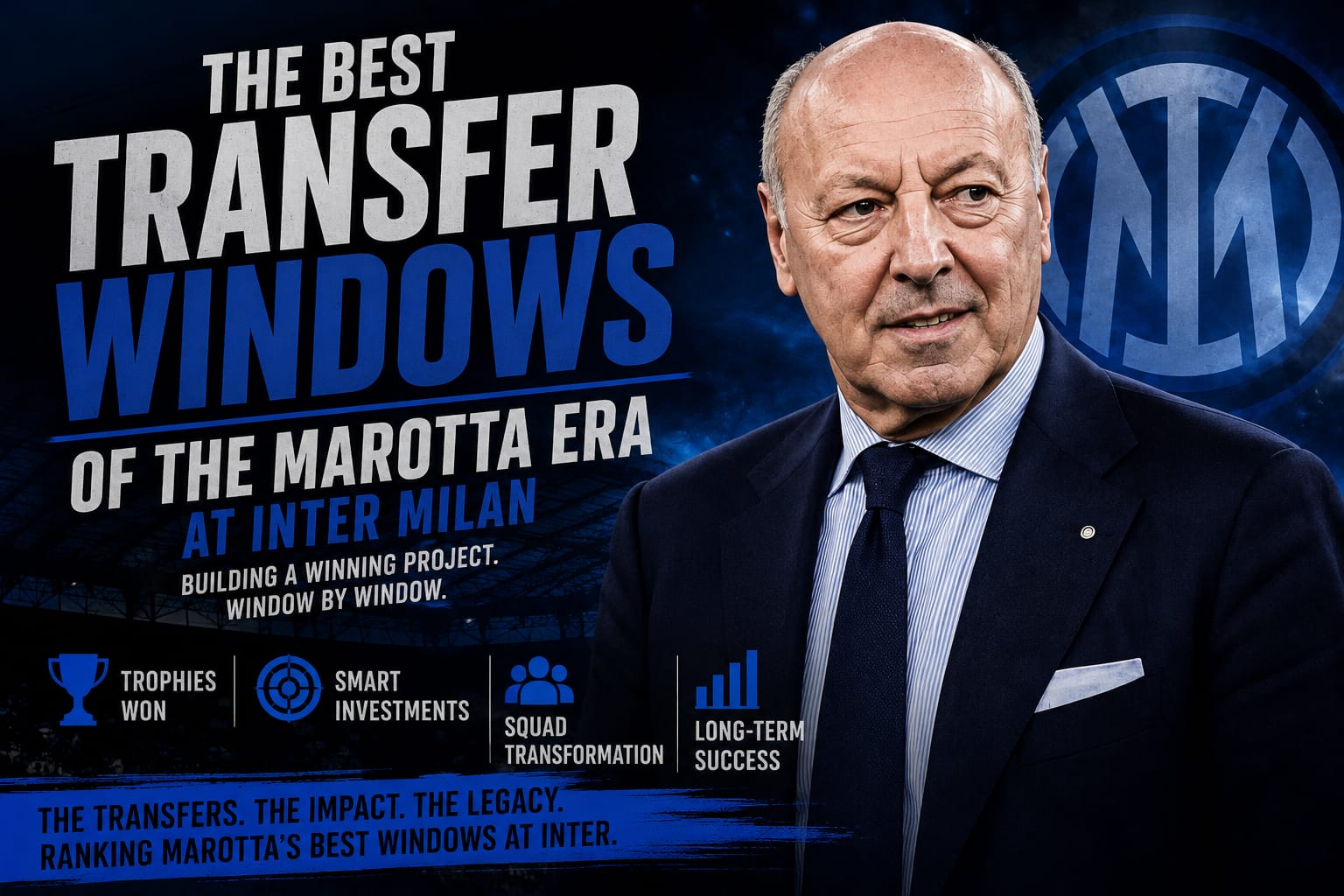
Beppe Marotta has transformed Inter Milan since arriving from Juventus in 2018. The man once mocked for cautious spending — fans dubbed him “Max20” for supposedly capping bids at €20m — has overseen one of the most dramatic squad rebuilds in Serie A history, delivering Scudetti, Coppa Italias, and two Champions League finals along the way.
With Inter now eyeing fresh reinforcements this summer to follow up their 2025-26 domestic double, it feels like the right moment to look back at every major transfer window under his watch — and give each one a verdict.
 Summer 2019: The Statement Window
 Summer 2019: The Statement Window
Grade: A
This was the window that announced Inter’s ambitions to the world. After years of operating below the elite clubs of Europe, Marotta convinced Zhang’s ownership to back Antonio Conte with real money. The headline act was Romelu Lukaku, signed from Manchester United for €74m — a fee that caused eyebrows to raise, but Lukaku would go on to score 64 goals in 95 appearances across two spells, becoming arguably the most important player in the Scudetto-winning 2020-21 season.
Nicolo Barella arrived from Cagliari for €45m in the same window. He has since become one of the finest midfielders in the world — an absolutely elite piece of business. Diego Godin was a free agent miss, fading quickly, but on balance, this window set the foundations for everything that followed.
The Verdict: The window that made Inter serious again.
 Summer 2020: Rebuilding Under Pressure
 Summer 2020: Rebuilding Under Pressure
Grade: B
After Lukaku’s debut season, Inter needed to add depth while dealing with financial constraints imposed by COVID-19. Achraf Hakimi arrived from Real Madrid for €40m — a steal in hindsight. The Moroccan was electric in Inter’s title-winning campaign and was sold to PSG just a year later for €68m as the club faced its cash crisis, but Marotta deserves credit for identifying him early.
Arturo Vidal and Aleksandar Kolarov were underwhelming additions, but the Hakimi deal alone makes this a positive window. It also demonstrated Marotta’s sharp eye for value on the continent.
The Verdict: One masterclass buried in a difficult summer.
Summer 2021: The Post-Scudetto Bloodbath — and the Recovery
 Summer 2021: The Post-Scudetto Bloodbath — and the Recovery
Grade: B+
Inter won the title but then watched it all apparently unravel. Lukaku left for Chelsea at a record fee. Hakimi was sold. Antonio Conte resigned. On paper, it was catastrophic. But what followed showed Marotta at his resourceful, cunning best.
Hakan Calhanoglu was signed from AC Milan — yes, directly from the rivals — on a free transfer. This move angered the Rossoneri fanbase and delighted the Nerazzurri faithful in equal measure, and Calhanoglu proved to be a transformational signing, eventually moving into the regista role where he became one of the best midfielders in Europe.
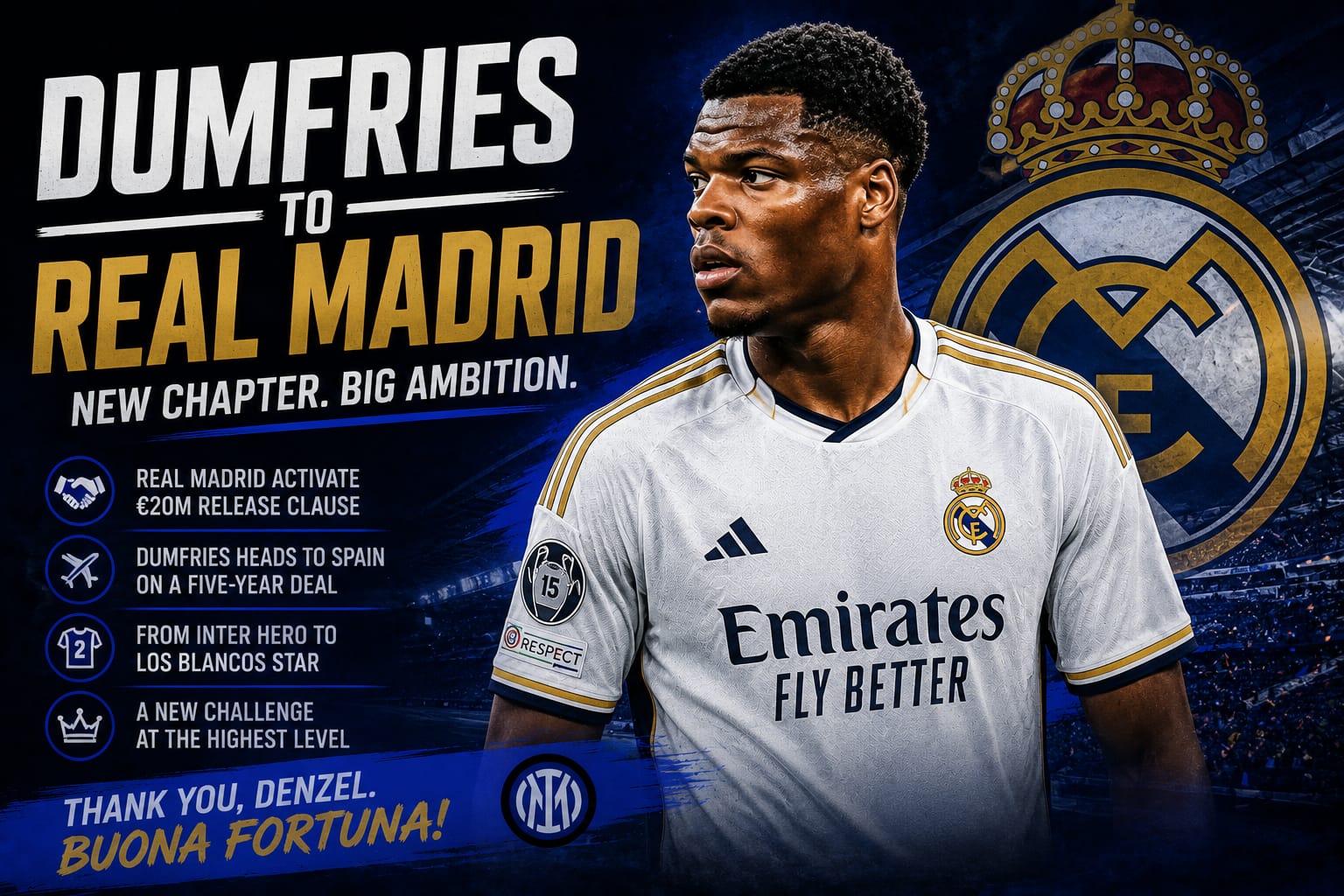
Edin Dzeko arrived on a free from Roma and proved an intelligent, experienced stop-gap. Dumfries came in from PSV for a modest €13.75m and spent five years as a reliable Serie A starter before his recent departure to Real Madrid.
Yes, Lukaku’s exit was painful, but the recoveries were creative. Marotta turned disaster into opportunity.
The Verdict: Lost the battle, won the war.
 Summer 2022: Smart, Surgical, Effective
 Summer 2022: Smart, Surgical, Effective
Grade: A-
With financial constraints still biting, this was a window built on intelligence rather than outright spending. Romelu Lukaku returned on loan from Chelsea — an emotional reunion that never fully delivered, with the Belgian struggling for consistency and eventually departing under a cloud. Marotta himself later made clear how “disappointed” he was with Lukaku’s attitude.
But the wider window was smart. André Onana arrived from Ajax on a free and was outstanding for one season before his Real Madrid move. Kristjan Asllani was signed cheaply as a Brozovic understudy and has developed into a reliable squad player.
The Verdict: Lukaku 2.0 didn’t work, but the framework around him was well constructed.
 Summer 2023: The Masterclass
 Summer 2023: The Masterclass
Grade: A+
This is the window that defines the Marotta era. Inter reached the Champions League final that season — and did it with a squad built almost entirely on astute recruitment and free transfers.
Marcus Thuram was signed on a free transfer from Borussia Mönchengladbach and has since become one of the best strikers in Europe. Benjamin Pavard arrived from Bayern Munich for €30m and immediately improved the backline. Yann Bisseck — plucked from Danish football for just a few million — grew into a dependable squad defender capable of playing across the back three.
This window crystallised what Marotta does better than almost anyone in football: he identifies the right player, avoids auctions, and lets contract situations do the work. The approach delivered a treble of league, cup, and UCL final appearance.
The Verdict: The textbook on how to build a squad on a controlled budget.
Summer 2024: Steady the Ship
Grade: B
After losing Onana and eventually accepting Lukaku’s messy departure, this window was more about stability. Mehdi Taremi arrived on a free from Porto — a reliable, technically gifted striker to support Lautaro and Thuram. Piotr Zielinski was another free transfer from Napoli who added depth and craft in midfield.
Neither signing set the world alight, but both performed their roles. More importantly, Marotta held the squad together — keeping Bastoni, Barella, and Calhanoglu when Europe came calling.
The Verdict: Quiet, professional, and necessary.
 Summer 2025: A New Generation
 Summer 2025: A New Generation
Grade: A-
This window showed Marotta and the club adapting to the Oaktree ownership era. Petar Sucic, Luis Henrique, Ange-Yoan Bonny, and Andy Diouf were all brought in — a deliberate move to lower the average squad age while retaining quality. Crucially, Pio Esposito was promoted into the first-team picture and has since broken through emphatically, including becoming a fixture in Italy’s national setup.
It was a reset window that would pay dividends across the 2025-26 double-winning season.
The Verdict: Building for the future while winning now. Only Marotta.
The Misses: A Word on the Low Points
No Marotta retrospective is complete without acknowledging the disappointments. Milan Skriniar’s contract saga ended with one of Inter’s best defenders in a decade leaving on a free transfer to PSG in 2023 — a negotiation failure that still stings. Marotta himself was candid about it, comparing Skriniar’s behaviour to Lukaku’s in a famous interview, noting that both “wronged Inter, not people.”
Lukaku’s second stint was another chapter to forget — an expensive loan that turned into an exit saga that dragged on longer than it should have.
The Overall Verdict
Across eight years, Beppe Marotta has proven himself as one of the most tactically and financially intelligent sporting directors in European football. He inherited an ambitious but bloated squad, lost its two biggest stars in the space of a summer, and somehow built a team that reached back-to-back Champions League finals and won a domestic double.
The secret? An unmatched ability to identify undervalued players, an iron will in contract negotiations (when players engage honestly), and the confidence to let stars leave when the price is right — or the attitude is wrong.
Inter’s challenge this summer, with Dumfries heading to the Bernabeu and a Palestra deal still unresolved, is whether the next chapter can match the standards of what came before.
We think it can. Because it’s Marotta.
What’s your take on Marotta’s best and worst Inter transfer window? Is the 2023 summer window the masterclass we think it is, or has another one impressed you more? Drop your verdict in the comments below — let’s get the debate going.