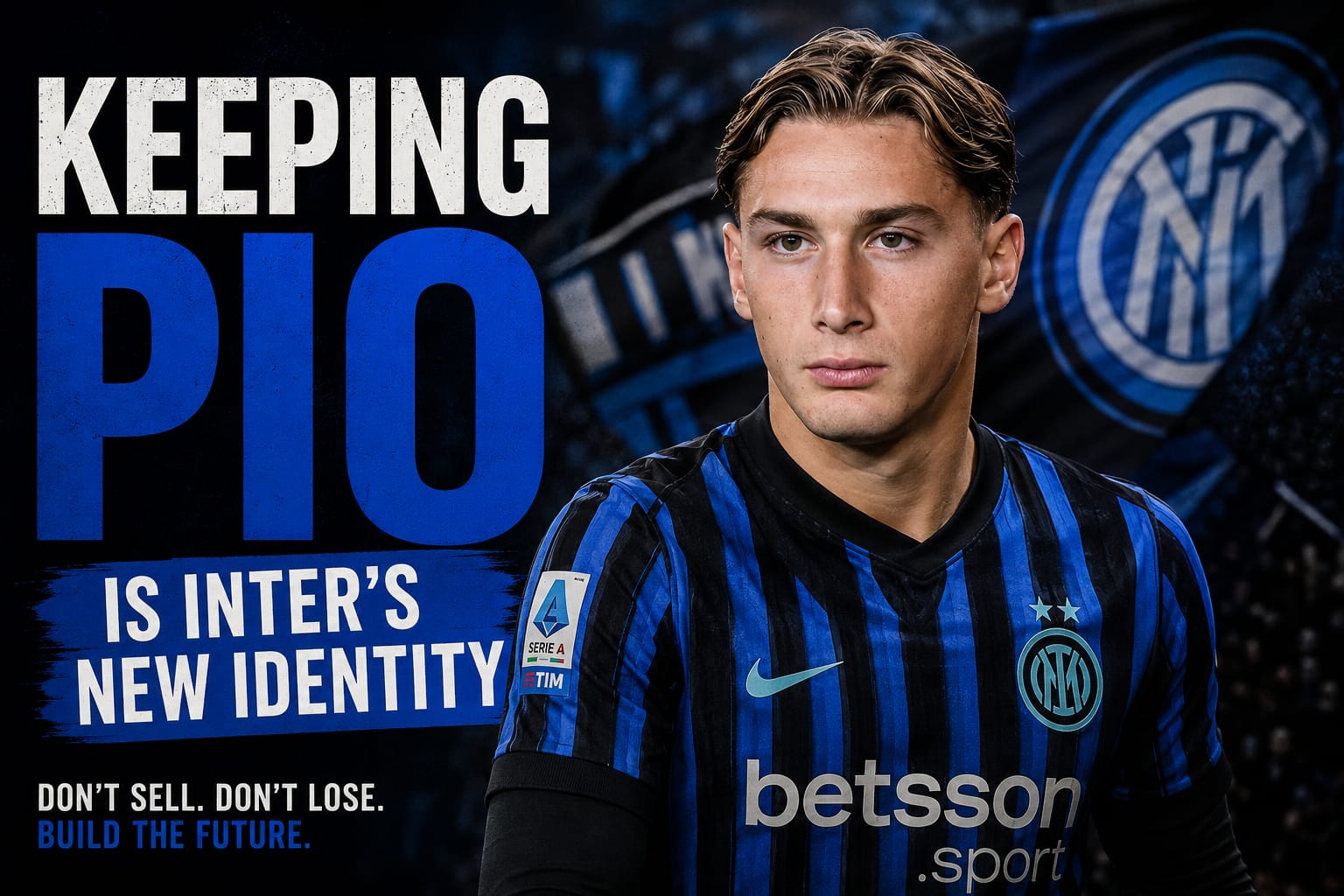
Selling Pio Esposito now would feel like a relic of Inter’s old financial reality. That reality is gone — and so should be any temptation to cash in.
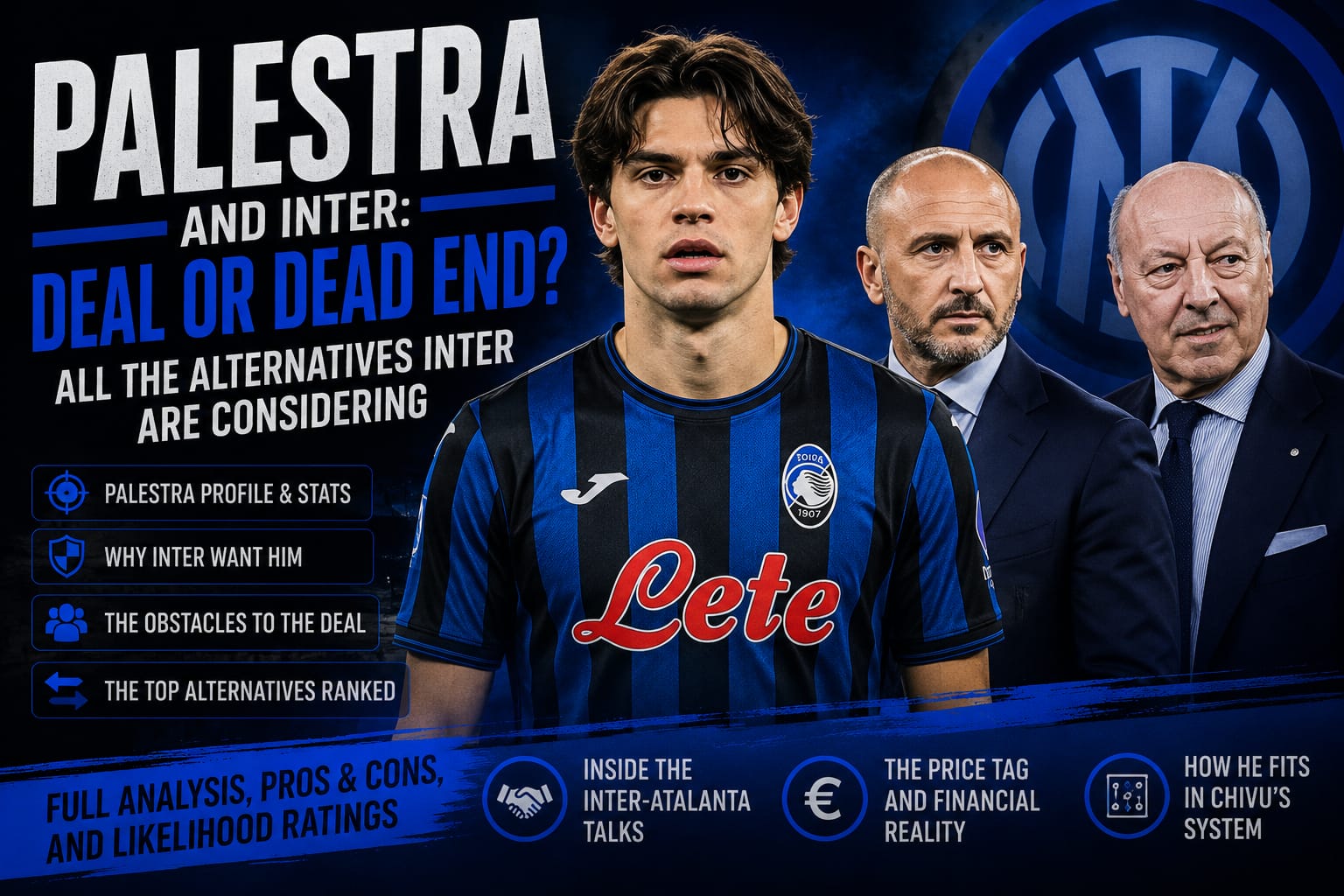
There’s a version of this summer where Inter sell Pio Esposito.
It wouldn’t even need much justification. Inter have depth at striker. The defence needs rebuilding. A Premier League club arrives with a number that makes the board sit up. Done deal, funds redirected, nobody really complains too loudly.
That version of the story is available to Inter right now. I think they should refuse to write it.
The Case For Selling — And Why It’s the Wrong Frame
Let’s be fair to the other side first, because the argument for selling isn’t crazy.
Lautaro and Thuram are Inter’s primary strikers. Esposito is currently third in the striker pecking order, with Ange-Yoan Bonny not far behind. Neither has proven they can shoulder the load across a full Serie A season. If one of Lautaro or Thuram suffers a long-term injury, Esposito becomes more important than any transfer fee.
Meanwhile, the defence is losing Acerbi, Darmian, and possibly more. A striker sale could meaningfully fund those needs.
However — and this is the part that matters — that logic only makes sense if you’re evaluating this summer in isolation. Esposito isn’t a depth piece to be cashed in when convenient. He’s a 20-year-old who broke into Italy’s senior squad in his first full season back from loan, scoring five goals in nine caps. Treating that like a spare asset misunderstands what Inter actually have.
 Why This Decision Feels Different — And Why It Should
 Why This Decision Feels Different — And Why It Should
Here’s where I want to be direct about something.
If Inter sold Esposito this summer for a big Premier League fee, it would feel familiar in a way that should make every fan uncomfortable. It would feel like the banter era — the years when Inter were forced to sell talented young players because the books demanded it, regardless of what those players might become.
Skriniar. Hakimi. The pattern was always the same: brilliant young talent, financial pressure, big offer arrives, talent leaves, fans watch them become superstars elsewhere.
Here’s the thing, though. Those circumstances don’t exist anymore. Inter’s financial position under Oaktree is fundamentally healthier than it was during those years. The pressure that forced those sales simply isn’t there in the same way.
Therefore, if Inter sold Esposito now, it wouldn’t be a necessity. It would be a choice — and a choice that mimics the old pattern without the old excuse.
What Esposito Actually Is Right Now
Strip away the transfer noise for a second and look at what Inter have.
Esposito is young. He’s homegrown — Inter’s academy, not a purchase. He’s already contributing at senior level, not just training with the first team. And he’s shown, in real matches that mattered, that he can help this team win.
That combination — young, homegrown, already productive — is rare. Most clubs spend tens of millions trying to manufacture exactly this profile through the transfer market. Inter grew it themselves.
Meanwhile, his trajectory only points one direction. A 20-year-old scoring in back-to-back international friendlies, with four Premier League clubs reportedly monitoring him, isn’t a player whose value is about to plateau. It’s a player whose value is about to accelerate.
Selling now means selling at the bottom of that curve. Why would Inter do that voluntarily?
 One Season Isn’t Enough
 One Season Isn’t Enough
Here’s a simple way to think about it: Inter have had one full season of the “real” Pio Esposito — the version who returned from Spezia, broke into the first team, and forced his way into Italy’s squad.
One season. That’s it.
Compare that to the kind of long-term development arcs that actually pay off in football. Lautaro Martinez, when Inter signed him, was an obviously talented young striker — but his best seasons came years later, after sustained development within the club. The talent was visible immediately. The value came from patience.
Esposito reminds me of that. The talent is obvious right now. But “obvious talent in year one” and “the player Esposito becomes by year four” are two completely different assets. Selling after one season means Inter never find out which one they actually have.
The Pressure Itself Could Help Him
Here’s a perspective I think gets missed in all of this.
Yes, the scrutiny is intense. Manchester United scouting him in person, twice. Arsenal, Tottenham, and Chelsea’s ownership all reportedly tracking him. That’s a lot of attention for a 20-year-old.
But handled correctly — and I think Chivu’s track record this season suggests it can be — that attention isn’t necessarily a threat. It can be fuel. Knowing that Europe’s biggest clubs are watching every performance is the kind of pressure that either breaks young players or accelerates them.
Inter’s job isn’t to hide Esposito from that attention. It’s to make sure he understands that Inter’s plan for him is bigger than any of the clubs currently circling.
 My Prediction — And My Line in the Sand
 My Prediction — And My Line in the Sand
Here’s where I’ll commit to something concrete.
I believe Esposito is still an Inter player in two years. Not on loan. Not sold and forgotten. Still here, still developing, hopefully still improving.
And if I were Marotta? I wouldn’t even pick up the phone unless an offer started with a seven and a zero — €70 million. Anything below that isn’t a number that should make Inter think twice. It’s a number that should get a polite, immediate no.
Unless Esposito himself comes to the club and says he wants to leave — which, currently, there’s no indication of — Inter shouldn’t feel any pressure here at all. None.
Why This Matters Beyond One Player
This isn’t really just about Esposito. It’s about what kind of club Inter want to be going forward.
For years, “Inter sold a brilliant young player for financial reasons” was a sentence fans got used to writing. Inter’s broader summer approach — smart signings, structured buybacks like Stankovic’s, value-driven business — suggests the club is trying to write a different sentence now.
Esposito should be the proof of that. Not the exception that gets cashed in when the number gets big enough, but the first real example of Inter keeping what they’ve built, because for the first time in a while, they actually can.
Inter are finally in a position to hold onto elite young talent instead of selling it. Pio Esposito should be exhibit A.
Is there any fee this summer that should make Inter reconsider keeping Pio Esposito — or should the answer be no, full stop, regardless of the number?